

In a political landscape dominated by seasoned politicians, Donald J. Trump’s rise to the White House stunned the world. Once known primarily as a real estate mogul and television personality, Trump transformed from outsider to Commander-in-Chief in a whirlwind journey that reshaped the future of American politics. His unexpected victory in the 2016 U.S. presidential election was more than a campaign win — it marked the rise of a new political era fueled by populism, digital strategy, and anti-establishment sentiment.
From Billionaire Businessman to Political Outsider
Donald Trump’s name was already a household brand by the early 2000s, thanks to his real estate empire and the success of The Apprentice. But his entry into politics in 2015 came as a surprise to many. When he announced his candidacy for president, few political analysts took him seriously. However, his blunt rhetoric, bold promises, and fierce criticism of the political elite resonated with a large portion of the American public. This marked the beginning of Trump’s political journey, one fueled by media attention and grassroots momentum.
The Populist Movement and Middle America’s Voice
What differentiated Trump’s presidential campaign from others was his ability to tap into the frustrations of working-class Americans. He spoke directly to those who felt ignored by Washington. Promising to "Make America Great Again," Trump’s campaign leaned heavily on themes like economic nationalism, immigration reform, and job creation in forgotten industrial regions. This populist movement wasn’t just about policies—it was about restoring power to the people.
As the ultimate political outsider, Trump didn’t rely on traditional campaign tactics. Instead, he weaponized social media, especially Twitter, to bypass mainstream media and speak directly to voters. His strategy changed political communication forever and is still being studied by strategists today.
As the ultimate political outsider, Trump didn’t rely on traditional campaign tactics. Instead, he weaponized social media, especially Twitter, to bypass mainstream media and speak directly to voters. His strategy changed political communication forever and is still being studied by strategists today.
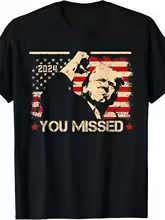
"Support what you believe in — wear it loud, wear it proud!"
Crashing Through the Republican Establishment
Initially dismissed by many within the Republican Party, Trump shocked the GOP by dominating the primary season. His ability to crush seasoned opponents like Jeb Bush, Marco Rubio, and Ted Cruz revealed a Republican political shift toward outsider politics. Trump’s direct and often controversial style resonated with a base that was growing tired of “business as usual.”
By the time he faced off against Democratic nominee Hillary Clinton, Trump had already redefined the rules of political campaigning. His unconventional approach and the deep divide in American politics set the stage for a historic election night.
The Shocking 2016 Victory
Few expected Trump to win the 2016 election. Polls and pundits largely predicted a Clinton victory. Yet on November 8, 2016, the results rolled in, shocking the nation and the world. Trump won key swing states like Michigan, Wisconsin, and Pennsylvania—states that hadn’t voted Republican in decades. His rise of Trump story became the ultimate underdog narrative.
The victory wasn’t just about the numbers. It was a symbolic rejection of the establishment and a powerful statement about the changing identity of American voters. The political earthquake had officially hit Washington, and the aftershocks are still being felt.
By the time he faced off against Democratic nominee Hillary Clinton, Trump had already redefined the rules of political campaigning. His unconventional approach and the deep divide in American politics set the stage for a historic election night.
The Shocking 2016 Victory
Few expected Trump to win the 2016 election. Polls and pundits largely predicted a Clinton victory. Yet on November 8, 2016, the results rolled in, shocking the nation and the world. Trump won key swing states like Michigan, Wisconsin, and Pennsylvania—states that hadn’t voted Republican in decades. His rise of Trump story became the ultimate underdog narrative.
The victory wasn’t just about the numbers. It was a symbolic rejection of the establishment and a powerful statement about the changing identity of American voters. The political earthquake had officially hit Washington, and the aftershocks are still being felt.
Trump’s First Term and Continued Influence
During his time in the White House, Trump continued to defy expectations. From tax reform and deregulation to contentious immigration policies and trade wars, his presidency was marked by constant media attention and polarized opinions. Whether you loved him or hated him, no one could ignore him.
His ability to dominate headlines and control the narrative showcased a new era of Trump media strategy that prioritized engagement over tradition. The influence he wielded extended far beyond legislation—it permeated culture, international relations, and the global perception of America.
His ability to dominate headlines and control the narrative showcased a new era of Trump media strategy that prioritized engagement over tradition. The influence he wielded extended far beyond legislation—it permeated culture, international relations, and the global perception of America.
The 2020 Loss and 2024 Comeback
Trump’s 2020 election loss to Joe Biden did not signal the end of his political career. On the contrary, it became the launchpad for a massive movement of supporters who believed in his vision for America. Trump’s claims of election fraud, while widely disputed, energized his base and sparked debates about democracy, truth, and the future of elections.
As 2024 approaches, Donald Trump 2024 has become a rallying cry for millions. His rallies still draw massive crowds, and he remains the frontrunner for the Republican nomination. Political analysts are now seriously considering another Trump White House bid, and the possibility of a dramatic return looms large.
A Lasting Legacy on American Politics
Trump’s legacy is complex. He reshaped the Republican Party, inspired a wave of populist candidates worldwide, and forced Americans to confront issues of identity, governance, and media manipulation. While controversial, his impact is undeniable.
Whether he returns to the Oval Office in 2024 or not, the political era of Trump is far from over. His unique blend of charisma, controversy, and communication mastery continues to shape the national conversation.
As 2024 approaches, Donald Trump 2024 has become a rallying cry for millions. His rallies still draw massive crowds, and he remains the frontrunner for the Republican nomination. Political analysts are now seriously considering another Trump White House bid, and the possibility of a dramatic return looms large.
A Lasting Legacy on American Politics
Trump’s legacy is complex. He reshaped the Republican Party, inspired a wave of populist candidates worldwide, and forced Americans to confront issues of identity, governance, and media manipulation. While controversial, his impact is undeniable.
Whether he returns to the Oval Office in 2024 or not, the political era of Trump is far from over. His unique blend of charisma, controversy, and communication mastery continues to shape the national conversation.


 Follow us on Instagram


0 Comments